Smart Contract Audit vs Penetration Testing: What Web3 Founders Actually Need
Many Web3 founders make the same assumption:
“We had our smart contracts audited, so our product is secure.”
Unfortunately, that conclusion is often incomplete.
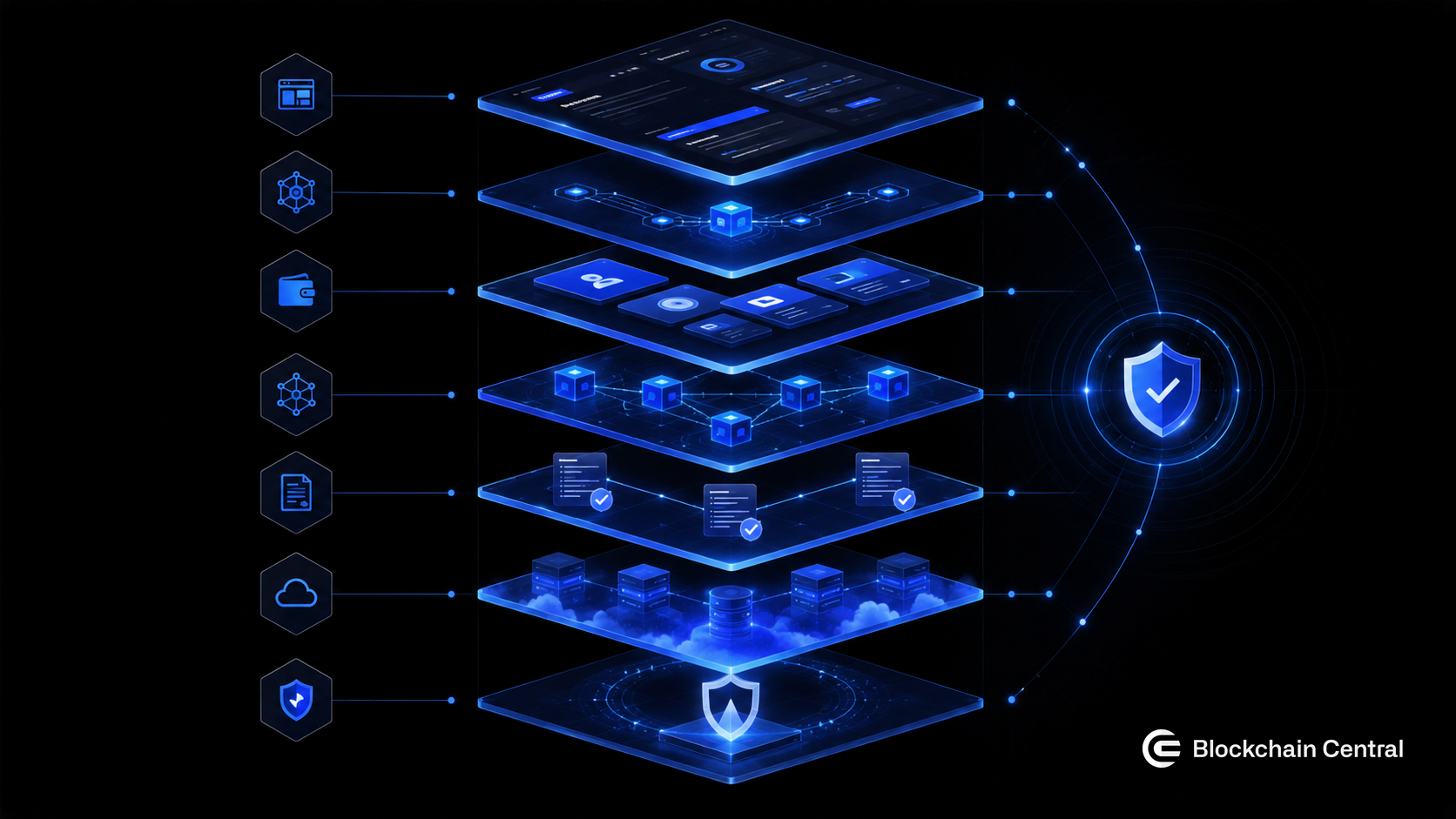
A smart contract audit is an important part of Web3 security, but it only examines one layer of the overall system. Modern Web3 platforms include websites, APIs, wallet authentication flows, cloud infrastructure, admin dashboards, mobile applications, third-party integrations, and operational processes. Any of these components can become an attack surface.
This is why understanding the difference between a smart contract audit and Web3 penetration testing is essential before launch.
In simple terms:
- A smart contract audit secures the on-chain logic.
- A Web3 penetration test secures the surrounding product.
- Serious launches often require both.
Founders may be preparing a token launch, decentralized application (dApp), staking platform, marketplace, or another blockchain-based product. In each case, understanding what each service protects—and what it does not protect—can improve launch readiness and investor confidence.
However, founders should also understand what neither service can do. Passing an audit does not guarantee security. Passing a penetration test does not guarantee security. Both provide a snapshot of risk at a specific point in time. Security remains an ongoing process that requires continuous improvement, monitoring, and reassessment.
What Is a Smart Contract Audit?
A smart contract audit is a structured security review of blockchain-based code and protocol logic.
The objective is to identify vulnerabilities, design flaws, implementation errors, and business logic risks before contracts are deployed or upgraded.
A typical smart contract audit evaluates:
Contract Logic
Auditors review whether the contract behaves according to its intended design and specifications.
Access Control
Security teams examine administrative permissions, ownership structures, role assignments, and privileged functions to determine whether unauthorized actions could occur.
Business Logic
Even technically correct code can contain flawed economic or operational logic. Auditors assess whether protocol rules function as intended under real-world conditions.
Reentrancy and State Manipulation
Auditors test for vulnerabilities that could allow attackers to repeatedly interact with a contract before state updates are finalized.
Upgradeability Risks
Upgradeable contracts introduce additional security considerations, including proxy configurations, initialization controls, and upgrade authority management.
Oracle Assumptions
Protocols relying on external data feeds must evaluate how oracle failures, manipulation, or delays could affect system behavior.
Arithmetic and Rounding Errors
Minor mathematical errors can create unexpected outcomes, especially in financial applications involving rewards, staking, lending, or token distribution.
Token Mechanics
Token issuance, minting, burning, vesting, transfer restrictions, and supply controls are commonly reviewed.
Cross-Contract Interactions
Modern protocols rarely operate in isolation. Auditors assess how contracts interact with other contracts and whether those interactions introduce risk.
Industry frameworks such as the OWASP Smart Contract Security Verification Standard (SCSVS), OWASP Smart Contract Top 10, OWASP Smart Contract Security Testing Guide (SCSTG), and Smart Contract Weakness Enumeration (SCWE) provide useful structures for evaluating smart contract vulnerabilities and blockchain security audit coverage.
What Does a Smart Contract Audit Not Cover?
This is where many founders develop a false sense of security.
A smart contract audit focuses primarily on blockchain-based code. It does not automatically assess the broader application environment.
A smart contract audit typically does not test:
- Frontend security
- Admin dashboards
- APIs
- Cloud infrastructure
- Wallet-login sessions
- DNS configuration
- Hosting configuration
- Private key management
- Employee operational security
- User phishing resistance
- Mobile application security
- Authentication workflows
- Infrastructure permissions
For example, a token contract may be perfectly secure while the administrative dashboard controlling token distribution remains vulnerable.
Similarly, a staking protocol may pass a smart contract audit while its API exposes sensitive administrative functionality.
In both cases, the contract itself may not be the weakness.
The surrounding product becomes the attack surface.
This distinction is one of the most important concepts founders should understand when evaluating Web3 security assessment services.
One of the most dangerous mistakes is assuming an audit report means the entire platform is secure. As a result, audit-only thinking can leave blind spots in infrastructure, operations, authentication systems, and user-facing components that may never have been tested.
What Is Web3 Penetration Testing?
Web3 penetration testing simulates how a real attacker would attempt to compromise the broader platform.
Rather than focusing solely on on-chain code, penetration testing examines how users, systems, infrastructure, and applications interact.
The goal is to identify vulnerabilities across the entire attack surface.
A Web3 penetration test may evaluate:
Website and Frontend Security
Testing for client-side vulnerabilities, malicious script injection, insecure wallet interactions, and application-level weaknesses.
APIs
Reviewing API authentication, authorization, rate limiting, input validation, and exposure of sensitive functionality.
Backend Systems
Assessing servers, databases, middleware, and supporting services.
Admin Panels
Testing administrative interfaces that control critical business functions.
Wallet Authentication
Reviewing login flows, session management, wallet signatures, replay protections, and authorization mechanisms.
Session Handling
Evaluating how user sessions are created, maintained, and terminated.
Cloud Infrastructure
Reviewing cloud permissions, exposed services, storage configurations, network security controls, and deployment practices.
RPC Exposure
Assessing whether exposed blockchain infrastructure introduces unnecessary risk.
Bridge Middleware
Reviewing middleware and integration layers connecting multiple chains or external services.
Mobile Applications
Where applicable, testing mobile-specific security controls and attack vectors.
Frameworks such as the OWASP Web Security Testing Guide (WSTG), OWASP Application Security Verification Standard (ASVS), OWASP Mobile Application Security guidance, and NIST SP 800-115 provide structured approaches to penetration testing and security assessment.
Smart Contract Audit vs Penetration Testing: The Simple Difference
| Area | Smart Contract Audit | Web3 Penetration Test |
|---|---|---|
| Primary target | On-chain code and protocol logic | Entire application ecosystem |
| Main question answered | Is the contract logic secure? | Can an attacker compromise the product? |
| Common findings | Reentrancy, access control flaws, logic bugs, token risks | Authentication flaws, API weaknesses, admin panel issues, infrastructure misconfigurations |
| Timing | Before deployment or upgrades | Before launch and periodically thereafter |
| Deliverables | Audit report with findings and remediation guidance | Penetration testing report with attack paths and remediation guidance |
| What it does not replace | Full-stack security testing | Deep contract logic review |
Why Founders Often Need Both
Many Web3 incidents occur outside the smart contract itself.
Even a secure contract can still be connected to an insecure frontend.
Likewise, an audited token can still be managed through a vulnerable administrative interface.
Moreover, a well-designed protocol can still be exposed through weak APIs or cloud infrastructure.
However, the opposite is also true.
A penetration test cannot replace a deep review of smart contract logic. A tester may identify application weaknesses while missing subtle protocol-level vulnerabilities.
Therefore, these services address different risks.
Example: Ronin Bridge
The Ronin compromise is frequently cited because the issue was not simply a smart contract coding error. Attackers gained control of validator infrastructure and signing authority, demonstrating how operational controls and infrastructure security can become critical attack vectors even when the underlying contracts are not the primary weakness.
Example: BadgerDAO
In the BadgerDAO incident, attackers reportedly compromised frontend infrastructure and injected malicious code that targeted users interacting with the platform. The smart contracts were not the only attack surface. The surrounding application environment became the path of compromise.
Example: Harmony Horizon Bridge
The Harmony Horizon Bridge incident highlighted another important lesson. The compromise involved validator key management and bridge infrastructure, rather than a traditional smart contract exploit. Therefore, teams should review operational security, bridge assumptions, and supporting infrastructure alongside contract code.
These examples highlight an important reality:
Blockchain systems are rarely compromised through only one layer.
Security must be evaluated across the full stack.
When Should Startups Budget for an Audit, a Pentest, or Both?
Founders often ask when security spending becomes necessary.
A practical approach is to align security investments with risk exposure.
Budget for a Smart Contract Audit When:
- Smart contracts will hold or control user funds.
- Tokens will be publicly distributed.
- Staking, vesting, rewards, governance, or treasury functions are involved.
- Contracts are approaching mainnet deployment.
- Investors or partners require independent security validation.
Budget for a Web3 Penetration Test When:
- The product includes a public-facing website or dApp.
- Users authenticate through wallet connections.
- Administrative dashboards exist.
- APIs, backend systems, or cloud infrastructure support the platform.
- Sensitive business operations depend on supporting applications and services.
Budget for Both When:
- The platform is preparing for public launch.
- User funds will be managed or processed.
- Institutional investors are performing technical due diligence.
- The platform includes both smart contracts and supporting applications.
- A token presale, staking platform, bridge, marketplace, or financial protocol is being launched.
As a general rule, the larger the attack surface, the stronger the case for combining a smart contract audit with Web3 penetration testing.
Recommended Security Sequence Before Launch
Founders often ask whether an audit or pentest should come first.
A practical sequence is:
1. Architecture and Threat Model
Identify assets, attack surfaces, trust assumptions, and security objectives.
2. Internal Code Review
Conduct internal reviews before engaging external specialists.
3. Smart Contract Audit
Perform an independent review of on-chain code and protocol design.
4. Fix Critical and High Findings
Remediate identified vulnerabilities.
5. Re-Audit or Remediation Verification
Confirm fixes have been properly implemented.
6. Web3 Penetration Test
Assess the broader application environment.
7. Fix Application, API, Authentication, and Infrastructure Findings
Address identified weaknesses.
8. Retest
Verify remediation effectiveness.
9. Launch Readiness Review
Perform a final security validation before launch.
10. Post-Launch Monitoring
Implement ongoing monitoring, alerting, and incident response procedures.
Moreover, security should not end after launch. New features, infrastructure changes, third-party integrations, and evolving attack techniques can introduce new risks over time. Regular reassessment remains essential.
Example: Token Presale Platform
Consider a founder launching a token presale platform.
A smart contract audit may review:
- Token contract
- Staking contract
- Claiming logic
- Referral logic
- Vesting mechanisms
- Unlock schedules
- Administrative permissions
A Web3 penetration test may evaluate:
- Presale website
- Buy box functionality
- Wallet connection flows
- Admin dashboard
- API endpoints
- Fiat on-ramp integrations
- Cloud infrastructure
- User session management
Together, both assessments address different risk categories.
However, completing one does not automatically complete the other.
What Investors Should Ask
Investors increasingly perform technical due diligence before allocating capital.
Useful questions include:
- Was only the smart contract audited?
- Were critical and high findings fixed?
- Was there a re-audit or remediation verification?
- Was the frontend tested?
- Was the admin dashboard tested?
- Were APIs tested?
- Were cloud permissions reviewed?
- Is there a public or shareable report?
- Is there a post-launch monitoring plan?
These questions help investors understand whether security has been evaluated comprehensively rather than narrowly.
Founder Checklist Before Launch
| Question | Status |
|---|---|
| Have all in-scope contracts been independently audited? | □ |
| Were critical and high findings fixed and verified? | □ |
| Were upgradeable contracts reviewed for initialization and admin risks? | □ |
| Were frontend, APIs, wallet-login flows, and admin panels pentested? | □ |
| Were cloud permissions and exposed services reviewed? | □ |
| Were bridge or relayer assumptions tested, if applicable? | □ |
| Is there a public or shareable security report? | □ |
| Is there a post-launch monitoring plan? | □ |
Conclusion
The debate around smart contract audit vs penetration testing often starts with the wrong assumption.
These services are not alternatives.
They address different layers of risk.
Specifically, a smart contract audit protects the on-chain logic.
Meanwhile, a Web3 penetration test protects the surrounding product.
Neither guarantees security.
For example, passing an audit does not mean the frontend, APIs, cloud infrastructure, authentication systems, or operational controls are secure.
Likewise, passing a penetration test does not prove the absence of protocol-level vulnerabilities.
Ultimately, security is not a one-time event. It is an ongoing process of assessment, remediation, monitoring, and improvement.
If your platform will handle funds, users, investors, or public launch risk, treating one service as a replacement for the other is dangerous.
Organizations that understand this distinction are better positioned to reduce security exposure, improve launch readiness, and strengthen investor confidence.
References
Security Standards and Frameworks
- OWASP Smart Contract Security Verification Standard (SCSVS)
- OWASP Smart Contract Top 10
- OWASP Alternate Top 15 Web3 Attack Vectors
- OWASP Smart Contract Security Testing Guide (SCSTG)
- OWASP Smart Contract Weakness Enumeration (SCWE)
- OWASP Web Security Testing Guide (WSTG)
- OWASP Application Security Verification Standard (ASVS)
- OWASP Mobile Application Security
- NIST SP 800-115 Technical Guide to Information Security Testing and Assessment
Industry Resources
- CertiK Smart Contract Audit Methodology
- CertiK Web3 Penetration Testing Services
- Hacken Smart Contract Audit Services
- Hacken Penetration Testing Services
- Hacken dApp Security Assessment Methodology
- Sherlock Smart Contract Auditing Guide
FAQ
Is a smart contract audit the same as a penetration test?
No. A smart contract audit reviews blockchain-based code and protocol logic, while penetration testing evaluates the broader application environment, including websites, APIs, infrastructure, authentication systems, and administrative interfaces.
Do I need a pentest if my smart contract was already audited?
In many cases, yes. An audit does not automatically assess frontend security, APIs, cloud infrastructure, wallet authentication, or operational security controls.
What does a smart contract audit not cover?
Smart contract audits generally do not test websites, APIs, admin dashboards, cloud environments, DNS configurations, hosting setups, user phishing resistance, or infrastructure permissions.
What does a Web3 penetration test cover?
A Web3 penetration test may cover frontend applications, APIs, backend systems, cloud infrastructure, wallet authentication flows, admin panels, bridge middleware, mobile applications, and supporting services.
Which should come first: audit or pentest?
Typically, the smart contract audit comes first because protocol-level vulnerabilities should be resolved before testing the broader application environment.
Can a dApp be hacked even if the contracts are audited?
Yes. Attackers may target frontend systems, infrastructure, authentication workflows, administrative controls, operational processes, or third-party integrations even when audited contracts remain secure.
What should be tested before a token presale?
Founders should consider reviewing token contracts, staking logic, referral systems, vesting mechanisms, frontend applications, wallet connections, APIs, administrative interfaces, and cloud infrastructure.
What should investors look for in a Web3 security report?
Investors should verify the scope of testing, severity of findings, remediation status, verification activities, infrastructure coverage, and ongoing monitoring plans.
CTA
Planning a token launch, dApp, or Web3 platform?
Blockchain Central can help you scope the right security path before development, audit procurement, or launch. Whether you are evaluating smart contract audits, Web3 penetration testing, token presale platform development, blockchain development, Web3 consulting, or broader security planning, a structured assessment can help align security efforts with your project’s actual risk profile and launch objectives.
© 2026 Blockchain Central. All rights reserved.