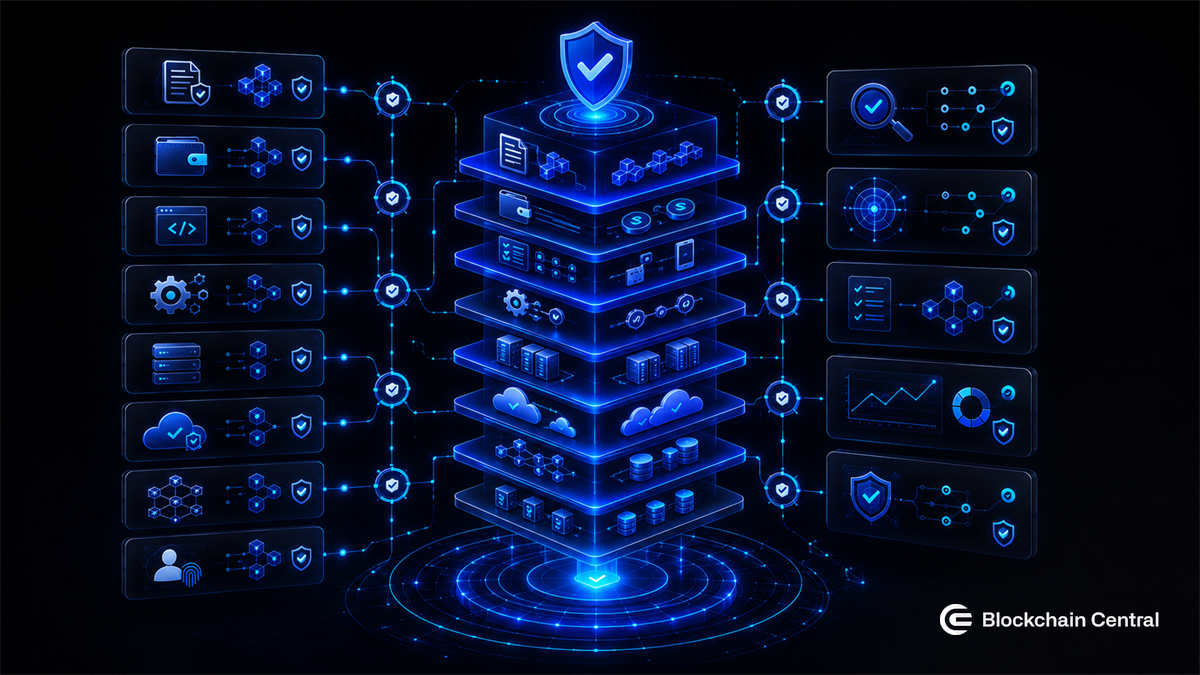
Web3 Security Testing Scope: What Founders Should Test Before Launch
A smart contract audit is important, but it is not the same thing as securing a Web3 product before launch.
Many founders ask one question too late:
“Did we get the contract audited?”
A better question is:
“What parts of our product can affect user funds, wallet signatures, admin control, data integrity, uptime, or launch credibility?”
That is the real purpose of a Web3 security testing scope.
For founders, this is not only a technical concern. A weak scope can delay launch, weaken investor confidence, create partner-review problems, and leave the team without clear evidence that the product is ready for users.
A serious Web3 launch depends on more than Solidity code. Users interact with frontends, wallets, APIs, backend services, cloud infrastructure, RPC providers, admin systems, third-party integrations, and operational processes. If any of those layers fail, the launch can still suffer even if the smart contract itself was reviewed.
This guide explains what founders, CTOs, product teams, and investors should expect in a proper Web3 security testing scope before going live.
What Web3 Security Testing Scope Actually Means
A Web3 security testing scope defines what will be reviewed, tested, validated, and retested before launch.
It should answer:
- Which contracts are included?
- Which frontend flows are included?
- Which wallet actions are included?
- Which APIs and backend systems are included?
- Which admin controls are included?
- Which cloud and deployment systems are included?
- Which third-party dependencies are included?
- What happens after issues are found?
- What evidence proves the product is ready to launch?
The scope matters because security work that is not clearly included is often silently excluded.
A team might assume its wallet flow, admin dashboard, or API endpoints are part of the review. The vendor might only be reviewing smart contracts. That mismatch creates risk.
Before launch, founders need a written scope that follows the real attack surface of the product.
Why a Smart Contract Audit Is Not the Whole Security Scope
A smart contract audit reviews contract code, logic, permissions, and common blockchain-specific risks. The OWASP Smart Contract Security Testing Guide provides a testing framework, while the OWASP Smart Contract Top 10 summarizes common risk categories. Neither replaces a product-specific, full-scope review.
That is necessary.
But it does not automatically review everything around the contract.
A smart contract audit may not fully cover:
- Wallet connection flows
- Signature prompts
- Token approval behavior
- Frontend transaction construction
- API authentication and authorization
- Admin dashboard access
- Cloud infrastructure
- Secrets management
- CI/CD pipelines
- RPC provider dependency
- DNS and CDN risks
- Monitoring and incident response
- Retesting after fixes
That is why founders should treat a smart contract audit as one part of launch security, not the entire security program.
Blockchain Central’s guide to smart contract audits vs Web3 penetration testing explains that service boundary in more detail. This article goes further by defining what belongs in scope before launch.
The Full Attack Surface Founders Should Put in Scope
A Web3 product usually has several security layers. Not every project needs the same depth of testing across every layer, but every founder should consciously decide what is in scope and what is not.
1. Smart Contracts and Protocol Logic
Smart contracts remain the foundation of many Web3 products.
Testing should include:
- Access control
- Ownership permissions
- Minting and burning permissions
- Upgradeability
- Pause and emergency functions
- Token mechanics
- Staking or vesting logic
- Reward calculations
- Oracle assumptions
- Integration assumptions
- Edge cases
- Reentrancy risk
- Business logic abuse
- Invariant and fuzz testing where appropriate
The key founder question is simple:
“What can this contract change, transfer, lock, unlock, mint, burn, upgrade, pause, or withdraw?”
Anything that controls user value or system permissions deserves careful review.
2. Wallet Connection and Signature Flows
Users do not interact with raw smart contracts. They interact through wallet prompts.
That makes wallet flow testing security-critical.
Scope should include:
- Wallet connection
- Chain switching
- Account switching
- Message signing
- Transaction signing
- Token approvals
- Permit-based approvals
- Rejection handling
- Mobile wallet behavior
- WalletConnect behavior
- Wrong-chain behavior
Modern Web3 products may use EIP-712 typed-data signing, ERC-2612 permit approvals, ERC-4361 Sign-In with Ethereum, or ERC-1271 contract wallet validation.
These are powerful patterns, but they must be implemented carefully.
Founders should ask:
- Are users shown clear signing context?
- Are signature messages readable?
- Are approvals limited where possible?
- Are permit flows tested?
- Are contract wallets and smart accounts supported correctly?
- Can signatures be replayed?
- What happens if the user rejects or abandons the wallet prompt?
Wallet UX is not just design. It is security UX.
3. Frontend Transaction Construction and Approval UX
The frontend often builds the transaction that the user signs.
If the frontend constructs the wrong transaction, calls the wrong contract, displays the wrong amount, or sends users to the wrong chain, the smart contract audit may not save the launch.
Testing should include:
- Correct contract addresses by chain
- Correct function calls
- Correct token amounts
- Correct recipient addresses
- Correct approval amounts
- Correct displayed balances
- Correct transaction state
- Wrong-chain handling
- Transaction rejection handling
- Error and retry behavior
- Protection against malicious injected providers
A clean smart contract can still be dangerous if the frontend misleads the user. The OWASP Web Security Testing Guide provides complementary web-layer testing coverage for this part of the system.
The frontend should make it clear what the user is connecting, approving, signing, buying, claiming, staking, or withdrawing.
4. APIs, JSON-RPC, Admin Panels, and Backend Services
Many Web3 products are not fully decentralized in practice.
They often rely on APIs, admin dashboards, databases, indexing services, referral systems, allocation records, analytics, or off-chain business logic.
These systems should not be ignored.
Testing should include:
- API authentication
- API authorization aligned with OWASP API Security Top 10 risks
- Admin permissions
- Session handling
- Rate limiting
- Input validation
- Webhook verification
- Signature verification
- JSON-RPC exposure
- Referral or reward abuse
- Claim or allocation abuse
- Sensitive logging
- Database exposure
- Manual override controls
Founders should ask:
“What can our backend change that affects user balances, rewards, claims, access, permissions, or launch state?”
If the answer is “anything important,” then backend and API testing belong in scope. The OWASP API Security Top 10 helps frame common API risks, while Ethereum’s JSON-RPC documentation identifies the interface exposed by many blockchain clients.
5. Cloud Infrastructure, Secrets, CI/CD, DNS, and CDN
Web3 products still depend on Web2 infrastructure.
That includes cloud hosting, deployment pipelines, secrets, domains, CDNs, logs, storage, and access controls.
Testing should include:
- Cloud IAM permissions
- Secrets management
- Environment separation
- CI/CD access
- Build pipeline security
- DNS protection
- CDN configuration
- Logging and monitoring
- Backup and recovery
- Admin console access
- RPC provider configuration
- DDoS exposure
- Incident response readiness
A project can fail at launch because of exposed secrets, weak admin access, bad deployment controls, or infrastructure that cannot handle traffic.
This is why “full-stack Web3 security” must include off-chain infrastructure. Blockchain Central’s Web3 infrastructure services describe the ownership and integration boundaries teams should make explicit.
6. Third-Party Dependencies, Oracles, Bridges, SDKs, and RPC Providers
Most Web3 products depend on external systems.
These may include:
- Oracles
- Bridges
- RPC providers
- Wallet providers
- Indexers
- SDKs
- Analytics scripts
- Payment providers
- On-ramp providers
- Cross-chain messaging systems
- Open-source dependencies
Founders should ask:
- What happens if the RPC provider fails?
- What happens if the oracle provides bad data?
- What happens if a bridge integration behaves unexpectedly?
- What happens if a package dependency is compromised?
- What happens if a third-party script changes?
- What assumptions does our system make about external services?
Third-party risk should be documented, not discovered during launch week. NIST’s Secure Software Development Framework provides a broader reference for secure development and software supply chain practices.
7. Launch Operations, Monitoring, and Incident Response
Security testing should not stop at vulnerability discovery.
A launch-ready scope should also include operational readiness.
That means:
- Severity triage
- Remediation planning
- Retesting
- Validation reports
- Monitoring
- Alerting
- Emergency pause process
- Multisig readiness
- Admin key readiness
- Launch-day ownership
- Incident response contacts
- Go-live / no-go decision criteria
The founder should know who can respond, who can pause, who can communicate, and what evidence exists before users arrive. NIST’s current incident response guidance treats preparation, response, recovery, and continuous improvement as part of cybersecurity risk management.
What Must Be Tested Before Launch vs What Is Conditional
Not every Web3 product needs the same security scope.
A small prototype does not need the same level of review as a DeFi protocol handling user deposits.
But every team should separate mandatory scope from conditional scope.
Must-Have Scope for Most Web3 Products
Most serious launches should include:
- Smart contract review
- Access-control review
- Wallet connection testing
- Transaction and approval flow testing
- Frontend transaction construction testing
- API and backend review where applicable
- Admin permission review
- Deployment and secrets review
- Retesting after fixes
- Launch readiness checklist
Conditional Scope
Some tests depend on the product type.
DeFi products may need:
- Fuzzing
- Invariant testing
- Oracle manipulation review
- Liquidity and reward logic review
- Economic attack modeling
Wallet products may need:
- Key management review
- WalletConnect testing
- Mobile testing
- ERC-1271 contract wallet support
- Signature validation testing
Marketplaces may need:
- Listing logic review
- Royalty logic review
- Order matching review
- Signature authorization review
Mobile apps may need:
- Mobile app security testing
- Deep link testing
- Secure storage review
- App-to-wallet transition testing
Cross-chain apps may need:
- Bridge assumptions review
- Message validation testing
- Chain-specific address review
- Replay and finality assumptions
AI-enabled Web3 apps may need additional attention because agents, automations, and internal workflows can introduce new permission boundaries between users, data, APIs, and blockchain actions. Their conditional scope may include:
- Prompt/input validation
- Permission boundaries
- Tool access review
- Human approval flows
- Data exposure review
What Vendors May Exclude Unless You Ask
Founders should never assume these are included:
- Frontend code review
- Wallet UX testing
- API testing
- Admin dashboard testing
- Cloud infrastructure review
- CI/CD review
- Mobile wallet testing
- SIWE authentication review
- Permit approval testing
- Retesting after remediation
- Launch-day monitoring
If it matters to the launch, put it in writing.
Testing Methods That Should Appear in the Engagement
A strong scope should explain not only what is being tested, but how it is being tested.
Common methods include:
Threat Modeling
Threat modeling identifies what can go wrong before testing begins.
It maps:
- Assets
- Users
- Admins
- Attackers
- Trust boundaries
- External dependencies
- High-risk flows
For founders, threat modeling is valuable because it turns a vague request like “audit our app” into a clear security plan.
Manual Review
Manual expert review is still essential.
Automated tools can help, but they cannot fully understand business logic, launch assumptions, admin processes, or user intent.
Manual review is especially important for:
- Contract logic
- Upgrade paths
- Privileged roles
- Signature flows
- Admin controls
- Economic assumptions
Offensive Testing
Offensive testing attempts to validate whether a weakness can actually be exploited.
This may include testing:
- API abuse
- Authentication bypass
- Frontend manipulation
- Authorization errors
- Transaction-flow abuse
- Admin access weaknesses
The goal is not to create drama. The goal is to prove impact before attackers do.
Fuzzing, Invariant Testing, and Simulation
More complex protocols may need advanced testing.
Fuzzing can test unusual inputs.
Invariant testing checks whether important rules remain true.
Simulation can help explore how contracts behave under different conditions.
These methods are especially relevant for DeFi, staking, tokenomics, marketplaces, and systems with complex state changes.
Configuration and Access-Control Review
Many serious failures come from configuration, not code.
Review should include:
- Owner wallets
- Admin roles
- Multisig setup
- Timelocks
- Upgrade authority
- Treasury controls
- Cloud IAM
- API keys
- Deployment permissions
Access control should be tested across both on-chain and off-chain systems. OpenZeppelin’s access-control documentation provides implementation context for roles and delayed sensitive operations.
Launch Readiness Requirements Beyond Finding Vulnerabilities
A security report is not the finish line.
Founders need to know what happens after findings are delivered.
A proper scope should include:
Severity Triage
Findings should be classified by impact and urgency.
The team should know:
- What blocks launch
- What should be fixed before launch
- What can be accepted temporarily
- What requires monitoring
- What needs retesting
Remediation
The report should provide developer-ready remediation guidance.
A vague finding is not enough.
The team should understand the issue, the risk, the affected component, and the expected fix.
Retesting
Retesting confirms whether fixes worked instead of asking founders to rely on assumptions. High-risk findings should be retested before launch.
Validation Report
A validation report or retest summary gives founders, investors, partners, or internal stakeholders evidence that issues were addressed.
This is especially useful for token launches, enterprise pilots, investor due diligence, and partner reviews.
Monitoring and Incident Response
Before launch, teams should define:
- What is monitored?
- Who receives alerts?
- Who can pause the system?
- Who controls emergency actions?
- Who communicates with users?
- What happens if the frontend, API, RPC provider, or contract behaves unexpectedly?
A team that cannot respond is not launch-ready.
How Founders Should Scope the Engagement and Evaluate Vendors
Founders should treat security scope like a product requirement, not a vague service request.
Before signing a statement of work, ask:
- Which contracts are included?
- Are wallet flows included?
- Are frontend transaction flows included?
- Are APIs included?
- Is the admin dashboard included?
- Is cloud infrastructure included?
- Are third-party integrations included?
- Is SIWE or wallet authentication included?
- Are EIP-712 signatures included?
- Are permit flows included?
- Are smart accounts or contract wallets included?
- Is retesting included?
- What deliverables will we receive?
- What qualifies as launch-blocking?
- What is explicitly out of scope?
Red flags include:
- “We only run automated tools”
- “Frontend is not our concern”
- “API testing is separate” without explaining boundaries
- “Retesting costs extra” without saying so upfront
- No clear deliverables
- No severity model
- No remediation guidance
- No written exclusions
- No launch-readiness recommendation
A serious provider should help you understand the scope, not hide behind jargon.
Pre-Launch Scope Checklist for Founders and CTOs
Use this checklist before launch.
Mandatory Scope Checklist
Confirm whether the security review covers:
- Smart contracts
- Access control
- Token permissions
- Upgradeability
- Wallet connections
- Signature flows
- Token approvals
- Frontend transaction construction
- APIs
- Admin dashboards
- Backend services
- Cloud infrastructure
- Secrets management
- CI/CD pipeline
- RPC provider dependency
- Third-party integrations
- Monitoring
- Incident response
- Retesting
Evidence Checklist Before Go-Live
Before launch, collect:
- Final security report
- Remediation summary
- Retest results
- Validation report
- Known accepted risks
- Launch-blocker status
- Admin wallet ownership record
- Multisig or timelock confirmation
- Monitoring plan
- Incident response plan
- Final go-live approval
Go-Live / No-Go Criteria
Do not go live if:
- Critical findings remain unresolved
- High-risk findings have not been reviewed
- Fixes were made but not retested
- Admin ownership is unclear
- Emergency controls are untested
- Wallet flows are confusing or broken
- API or backend access controls are weak
- Secrets are exposed
- Monitoring is absent
- The team does not know who responds during launch
A secure launch is not about eliminating every possible risk. It is about knowing the risk, reducing it, documenting it, and being ready to respond.
How Blockchain Central Helps
Blockchain Central helps founders and technical teams define practical security testing scopes before launch.
Its security validation services provide a live destination for teams evaluating this type of review.
That can include reviewing:
- Product architecture
- Smart contracts
- Wallet flows
- Frontend transaction journeys
- APIs
- Admin systems
- Cloud infrastructure
- Launch readiness
- Remediation priorities
The goal is not to sell unnecessary testing.
The goal is to help teams understand what actually needs to be reviewed before users, investors, partners, or the public rely on the product.
Need help defining your Web3 security testing scope? Review Blockchain Central’s services or contact the team to discuss architecture, smart contracts, wallet flows, APIs, infrastructure, and launch readiness before going live.
FAQ
What is included in Web3 security testing?
Web3 security testing can include smart contracts, wallet flows, signatures, token approvals, frontend transaction logic, APIs, backend services, admin systems, cloud infrastructure, third-party integrations, monitoring, and incident response readiness.
The exact scope depends on the product.
Is a smart contract audit enough before launch?
Usually no.
A smart contract audit is important, but it does not automatically test wallet prompts, frontend behavior, APIs, admin dashboards, cloud infrastructure, deployment pipelines, or launch operations.
What is the difference between Web3 penetration testing and a smart contract audit?
A smart contract audit focuses on contract code and on-chain logic.
Web3 penetration testing usually examines the broader product attack surface, including frontend, wallet flows, APIs, backend systems, infrastructure, authentication, and operational controls.
Should wallet flows and signatures be tested?
Yes.
Wallet flows and signatures are where users approve transactions, sign messages, grant permissions, and interact with the product. Errors or unclear prompts can create serious risk even if the contracts are audited.
Do APIs and cloud infrastructure matter in Web3 security?
Yes.
Most Web3 products still depend on APIs, admin dashboards, cloud systems, RPC providers, CI/CD pipelines, and secrets. These systems can affect user access, launch reliability, data integrity, and operational control.
What evidence should founders request before going live?
Founders should request the final report, remediation notes, retest results, validation evidence, accepted-risk list, launch-blocker status, admin-control confirmation, monitoring plan, and incident response plan.
Final Takeaway
A proper Web3 security testing scope should follow the real product, not just the smart contract repository.
If users connect wallets, sign messages, approve tokens, use APIs, depend on cloud systems, or trust admin operations, those layers deserve attention before launch.
A serious Web3 launch needs security coverage across the full system users trust with funds, signatures, data, access, and uptime.